When the shooting season begins, it's tempting to think your gundog needs a different diet to cope with the increased workload. After all, long days in the field, challenging terrain and repeated retrieves can place considerable demands on the body.
But what happens when the season ends? Many gundogs continue with regular training, fitness work and strength and conditioning, all of which still require energy and nutrients to support performance and recovery.
So, should we really be changing our dog's diet according to the shooting calendar?
Well, not necessarily. A dog's nutritional requirements are influenced by far more than whether they're working in the field. Their individual physiology, activity levels and recovery demands all contribute to how much energy they need.
Let's explore what the research tells us and how we can use it to make more informed feeding decisions throughout the year.
What influences a gundog's energy requirements?
A dog's energy requirements are influenced by several factors, including body weight, age, neutering status, fitness, environmental temperature and activity level.
For gundogs, the type of work also makes a difference.
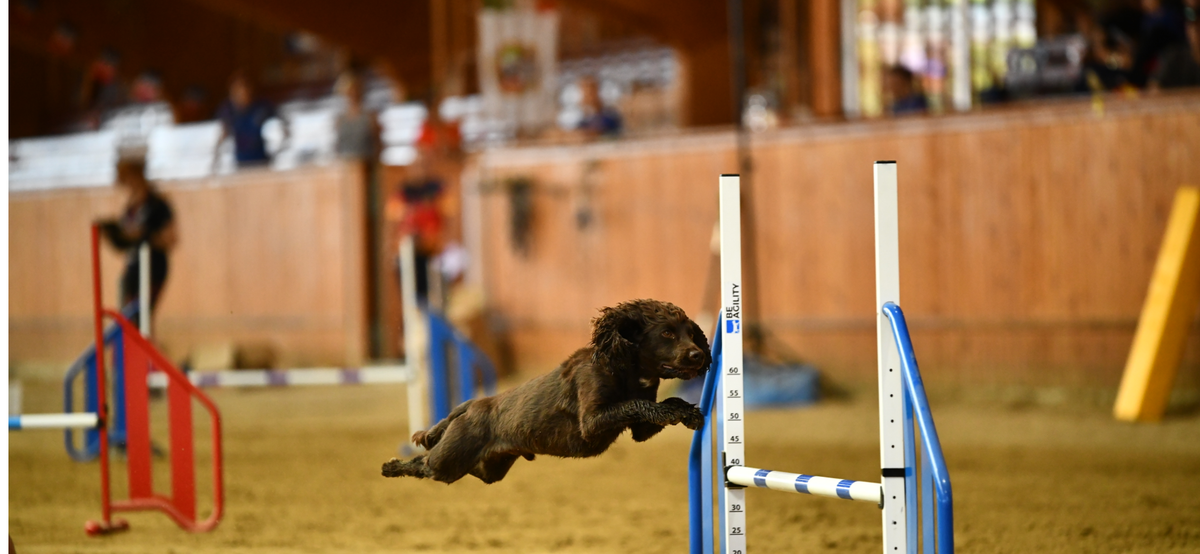
A Labrador spending much of a shoot day waiting at a peg before retrieving may have very different energy requirements from a spaniel continuously quartering thick cover. Both are working dogs, but the intensity, duration and pattern of their activity differ considerably.
Working in cold or wet conditions can also increase energy expenditure, particularly when dogs struggle to maintain body temperature.
What does the research tell us?
In a 2014 meta-analysis, Bermingham and colleagues examined 29 publications covering 70 groups of dogs to investigate why energy requirements vary between individuals.
Activity was an important factor. Racing dogs generally had the highest energy requirements, followed by working and hunting dogs, whilst pet and kennel dogs typically required less energy.
The researchers also identified differences associated with neutering status. Neutered dogs generally had lower energy requirements than entire dogs, suggesting that reproductive status should also be considered when calculating food intake.
This helps explain why two gundogs of similar weight, performing comparable work, may still need different amounts of food.
For us dog owners, feeding recommendations based on weight or a 'working dog' label should therefore be treated as starting points.
Practical takeaway: Feed to an ideal body condition score rather than relying solely on the feeding guide. The feeding guideline can't take into account your dog's individual needs.
How do working dogs fuel exercise and recovery?
When your gundog is working, their muscles need a constant supply of energy. This comes primarily from fats and carbohydrates, although the balance between the two changes depending on the intensity and duration of exercise.
During prolonged, lower-intensity activity, dogs can obtain a substantial proportion of their energy from fat. As exercise intensity increases, the body relies more heavily on carbohydrates because they can provide energy more rapidly.
This means a spaniel spending hours quartering cover may have different energy demands from a dog performing repeated, high-intensity retrieves.
Recovery matters too
But the nutritional demands don't end when the working day finishes.
Exercise places stress on the muscles and uses up energy reserves. During recovery, the body works to repair and rebuild muscle tissue, restore energy stores and replace fluids lost during activity.
Protein provides the amino acids needed for muscle repair and adaptation, whilst adequate energy intake supports these recovery processes.
Higher-intensity exercise also depletes muscle glycogen, the stored form of carbohydrate that muscles use for energy. Research in exercising dogs has shown that carbohydrate intake after exercise can accelerate glycogen replenishment, although this doesn't mean every gundog needs additional carbohydrates. The need for rapid replenishment depends on how demanding the exercise was and how soon the dog will be working again.
For dogs working consecutive days, providing sufficient nutrition to support recovery becomes particularly important.
Practical takeaway: Consider your dog's workload across the whole week, rather than just individual shoot days. Make sure they're receiving enough energy, quality protein and water to support both their activity and recovery.
Does your dog actually need a different food?
One common approach to seasonal feeding is switching to a food marketed for working or sporting dogs when the shooting season begins. These foods are often higher in fat and calories, making it easier to provide additional energy without substantially increasing meal size.
Fat provides approximately 9 kcal per gram, compared with approximately 4 kcal per gram from protein or carbohydrate, making it a useful energy source for dogs with high energy requirements.
Research into endurance dogs has demonstrated that dietary fat can support sustained exercise. For example, experimental research discussed by Hill (1998) found improvements in endurance performance in dogs consuming higher-fat diets under controlled conditions.
However, we can't automatically apply these findings to every gundog. Continuous endurance exercise differs from the intermittent activity typical of many shooting days.
For a dog working regularly and struggling to maintain weight, a more energy-dense diet may be useful. But a dog already receiving a nutritionally sound, well-tolerated diet may simply need more of its existing food.
Practical takeaway: Before changing foods, assess whether your dog's current diet is meeting their needs. If they're maintaining a healthy body condition, working comfortably and recovering well, there may be no reason to switch.
What about feeding during the off-season?
The end of the shooting season doesn't necessarily mean a dramatic reduction in energy requirements. Many gundogs continue training throughout the year, incorporating retrieving exercises, swimming, fitness sessions and structured strength and conditioning.
These activities still require energy and place demands on the muscles. Strength and conditioning, in particular, stimulates muscular adaptations that require adequate protein and energy during recovery.
A dog undertaking regular conditioning sessions may therefore have substantial nutritional requirements even when they're not attending shoots.
Of course, if your dog's activity decreases significantly, their food intake may need to be reduced to prevent unwanted weight gain. The important thing is to assess what your dog is actually doing rather than automatically reducing their food when the shooting season ends.
Practical takeaway: Look at your dog's off-season training schedule before changing portions. Building and maintaining fitness requires appropriate nutrition, even when there are no shoot days in the diary.
How much should you actually feed?
There isn't a single percentage increase that suits every gundog. Sorry.
A dog working one shoot day per fortnight may need relatively little adjustment, whilst one working several days each week could have substantially greater energy requirements.
Start with an amount that maintains a healthy body condition, then make gradual adjustments as workload changes.
For example, if your dog usually maintains their weight on X amount of food per day, increase their intake by 10%. This is an example of a measured adjustment rather than a recommendation for every dog or a best guess. Some working dogs may need considerably more (or less).
How to tell if you're feeding enough
To assess whether you're feeding enough, monitor:
- Body condition: Can you feel the ribs, and does your dog have a visible waist?
- Body weight: Weigh your dog every one to two weeks when workload changes to identify trends.
- Muscle condition: Look for changes in muscle mass, particularly around the shoulders, spine and hindquarters.
- Recovery: Is your dog recovering normally between working or training sessions?
If your dog is losing weight or muscle condition as workload increases, they may need additional energy. Persistent fatigue or poor recovery should also prompt consideration of training load and veterinary assessment, rather than assuming food intake is the only explanation.
Remember that any increase in calories should preserve the nutritional soundness of the diet, including adequate protein, essential fatty acids, vitamins and minerals.
For dogs fed fresh or raw diets, this means considering the energy density and nutritional value of the overall diet rather than simply increasing individual ingredients.
And if you're introducing a higher-fat food, make changes gradually to allow the digestive system time to adapt. No-one wants the runs on their first run out (unless it's an expected adrenaline poo!).
So, should your gundog's diet change with the seasons?
It depends.
A gundog's nutritional requirements reflect the work they're doing, their individual physiology and the demands of recovery.
For some dogs, increasing or decreasing portions of their existing diet will be sufficient. Others, particularly those working frequently or struggling to maintain body condition, may benefit from a more energy-dense food.
It's also important to remember that the off-season isn't necessarily a period of rest. Training, fitness and strength and conditioning all create nutritional demands of their own.
Rather than feeding according to the calendar or choosing a food simply because it's labelled 'working dog', use your dog's workload, body condition and recovery to guide what goes into their bowl.
References
- Bermingham EN, Thomas DG, Cave NJ, Morris PJ, Butterwick RF, German AJ (2014). Energy requirements of adult dogs: a meta-analysis. PLOS ONE 9(10): e109681. Read the paper
- PubMed 9868242
- PubMed 9361887
- PubMed 24951343