Quick Summary
- Fleas are always secondary to something else. The host's health determines flea attraction.
- Natural flea prevention for dogs starts with diet, gut health and immune function — not sprays or shampoos.
- Understanding the flea lifecycle helps you tackle the 95% of fleas living in your environment, not just on your dog.
- Conventional flea treatments are neurotoxic pesticides with documented side effects. There are effective alternatives.
- Garlic, raw goat's milk, nettle and a simple homemade spray form the backbone of a natural flea prevention protocol.
Let me say something that might surprise you: it is completely normal for your dog to have a flea or two. I know. That is not what you have been told. Most people see one flea and go into full crisis mode, reaching for the nearest chemical treatment, convinced their dog and home are infested. I get it. I have been there too.
But here is what I have learned after years of working with dogs holistically, and what I want this piece to be about: fleas are always secondary to something else. They are a symptom, not the problem. And if we only ever focus on elimination, killing the flea in front of us, we miss the far more important question: why is my dog attracting fleas in the first place?
That question is where real, lasting natural flea prevention begins.
Why Do Some Dogs Get More Fleas Than Others?

Fleas are opportunistic parasites. They do not land on dogs randomly. They select hosts based on signals such as body heat, carbon dioxide output, skin chemistry, odour. And the dogs producing the most attractive signals tend to be the ones whose health is compromised in some way.
The late Dr. Tom Hungerford, a respected Australian veterinarian, made a fascinating clinical observation: dogs fed on raw meaty bones did not tend to harbour fleas. He also noted that pets with the worst dental health carried the highest flea burden, and when their oral hygiene improved, their flea load decreased. The connection between oral health, systemic inflammation and immune function runs deep. If this is new to you, our piece on how dogs kept their teeth clean before toothbrushes is worth reading alongside this one.
Dr. Peter Dobias, a holistic veterinarian, has written compellingly about diet and fleas. He identifies blood sugar spikes caused by high-carbohydrate diets as a significant flea attractant. Processed kibble, full of grains and starches, creates exactly the kind of metabolic environment that makes a dog more appealing to parasites. Strong odours from poor gut health and toxic overload compound this further.
Bacteria also colonise unhealthy skin more readily. An unhealthy coat creates a hospitable surface for fleas in ways that a well-nourished, slightly acidic, mineral-rich coat simply does not.
The conclusion from all of this: effective natural flea prevention for dogs starts on the inside. Not with shampoos, coat dips or sprays. Those have their place as part of a comprehensive approach, but they are never where prevention begins.
Healthy animals with strong immune systems, vibrant coats and well-functioning detox pathways generally do not harbour many fleas. And even when healthy dogs do pick up a flea or two on a walk, their systems handle the bites without the excessive histamine response that causes all the itching, scratching and misery we associate with flea infestations.
Understanding the Flea Lifecycle

Before we get into what to do, understanding how fleas actually work will make you a far more effective natural guardian of your dog.
First, breathe. A flea or two is not a crisis. Learn to check your dog regularly, respond calmly, and understand what you are actually dealing with.
Fleas are elusive. Their bodies are protected by a hard shell that makes them genuinely difficult to kill, which is part of why chemical treatments have to be so toxic to have any effect. The most common varieties are dog fleas and cat fleas. They tend to bite at the base of the tail, between the toes, around the ears and on the belly. When they bite, they inject saliva into the skin, and it is this saliva that triggers itching, allergic responses and inflammation.
Fleas go through four life stages: egg, larva, pupa and adult. Here is the part most people do not know: the adult fleas you can see on your dog represent only around 5% of the total flea population in your home. The other 95% are eggs, larvae and pupae living in your environment. In carpets, in the gaps where the floor meets the skirting board, in bedding, in the garden.
The cycle works like this. Adult fleas lay eggs on your dog, which fall off into your home. A single female flea lays 50 or more eggs per day. That is over 1,000 eggs in her lifetime before she dies. And you cannot know how many females are in your environment at any one time.
Eggs hatch into larvae, which are actually quite vulnerable to human intervention because they are blind. Vacuuming consistently during warm months is genuinely effective flea control at this stage, not just good housekeeping. Focus on skirting boards, under furniture and anywhere your dog sleeps. Empty the vacuum outside immediately afterwards.
Larvae become pupae, which need warmth (15 to 30 degrees Celsius) and humidity of 50% or higher to survive. The pupal stage then forms a protective cocoon until conditions are right, including the presence of a viable host. That host is your dog.
The full lifecycle can complete in a few weeks or take several months, entirely depending on temperature and environmental conditions.
What this means practically: you cannot address fleas on your dog alone. You must simultaneously address the environment. Vacuum thoroughly and often. Wash bedding on a hot cycle weekly. Keep grass cut short in your garden during flea season. Fleas thrive in long grass, shade and humidity.
Environmental management and internal health together are your most powerful natural tools.
The Problem with Conventional Flea Treatments

When people panic about fleas, they often reach for whatever the vet recommends or whatever is on the shelf at the pet shop. Most of these products, spot-ons, oral tablets and collars, are pesticides. They work by targeting the flea's nervous system. But they do not only affect the flea.
Selamectin, found in products like Revolution, is a neurotoxin and a GABA antagonist. It works by blocking nerve signalling in parasites. Fipronil (Frontline), imidacloprid (Advantage), fluralaner (Bravecto), afoxolaner (NexGard) are all neurotoxins, all with documented side effects including seizures, tremors, organ damage, behavioural changes and in some cases death.
Spot-on treatments do not stay on your dog. As your dog moves through your home, those chemicals transfer onto floors, furniture, bedding and the hands of anyone who touches them, including children. Studies have found measurable pesticide levels in the blood of both dog owners and their children in households using pesticide-based flea collars. These chemicals excite the nervous system, depress immune function and place significant strain on the liver, the very organ your dog needs most to process toxins and regulate inflammation.
You are, in effect, asking a compromised immune system to process a poison, and then wondering why the flea problem keeps returning.
I understand that sometimes, in genuine crisis situations — a serious infestation, a dog with flea allergy causing real suffering — pharmaceutical intervention feels necessary. I am not here to judge anyone who has been there. But if you do choose to use prescription flea medication, please support your dog's body through it. Our Milk Thistle Seed Powder is a powerful liver protector that should ideally be started at least two weeks before any chemical flea treatment. It helps the liver process and eliminate the pesticide load. If you want to understand more about why milk thistle is such an important tool for dogs on any kind of medication, our piece on milk thistle as nature's ultimate liver support covers the science in detail.
You should never give your dog prescription flea medication without simultaneous liver and nervous system support. Full stop.
But the goal is always to build a dog who does not need that intervention in the first place. And that goal is entirely achievable.
How to Prevent Fleas Naturally in Dogs: A Whole-Body Approach
Start with Food

This is the single most impactful change you can make for natural flea prevention. A fresh, species-appropriate diet, ideally raw or lightly cooked with whole food ingredients, fundamentally changes your dog's internal chemistry. It reduces blood sugar spikes, supports gut microbiome diversity, reduces systemic inflammation and creates the kind of healthy coat and skin that is genuinely less attractive to parasites.
Processed food and high-carbohydrate ingredients do not just compromise your dog's health over time. They actively contribute to the metabolic conditions that attract fleas. If you are not sure whether your dog's current food is working for them, our piece on 5 signs your pet's food is not as healthy as you think is a good starting point.
Make sure your dog is also getting adequate trace minerals. A pinch of Himalayan salt in their food, or a supplement containing humic and fulvic acid, can help fill the nutritional gaps that even good diets sometimes leave.
Prioritise Gut Health

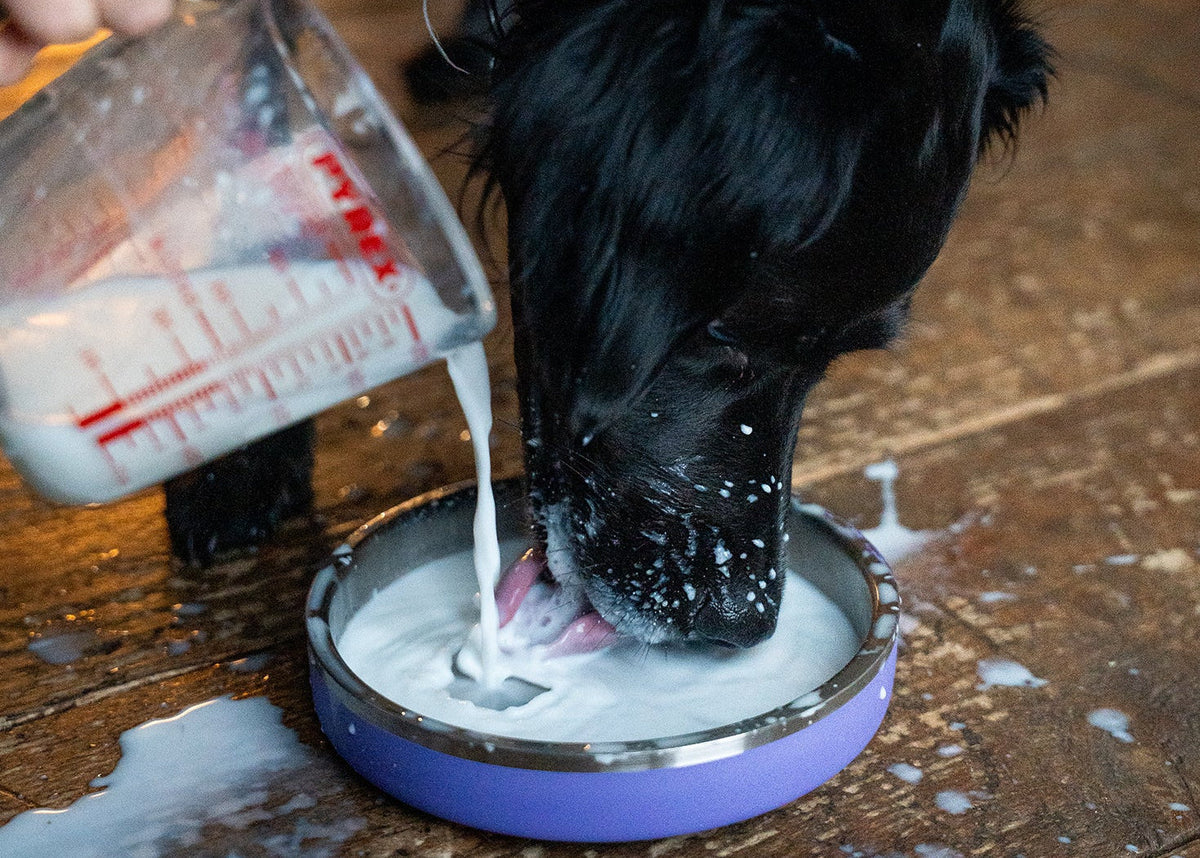
Around 70 to 80% of the immune system lives in the gut. A dog with a thriving gut microbiome is a far less appealing host to parasites. Adding raw goat's milk or kefir to the bowl is one of the most bioavailable things you can do, flooding the gut with live beneficial bacteria. Our Whole Goat's Milk Powder mixes easily into food and is particularly useful for dogs transitioning to a fresh diet or recovering from illness (but please note that raw goats milk might be better suited for those live cultures).
Dandelion root works beautifully alongside goat's milk as a prebiotic, feeding and sustaining the beneficial bacteria already present. The logic is straightforward: healthy gut leads to strong immunity, which leads to an unappealing host for fleas.
Use Garlic Correctly

Garlic has a complicated reputation in the dog world, but the fear is largely unfounded when it is used correctly. The concern comes from studies using extreme doses, the equivalent of 75 cloves for a 70lb dog. Fed in appropriate amounts, fresh organic raw garlic is safe, antimicrobial and genuinely effective for natural flea prevention.
Garlic's allicin compounds, created when you chop or crush fresh garlic 15 minutes before feeding, permeate into your dog's coat oil over time. This creates a surface environment that fleas find deeply unappealing. It takes approximately two weeks to build up, so start feeding garlic one month before flea season begins.
Daily dosing by weight:
Under 10kg: ¼ tsp
10 to 20kg: ½ tsp
Over 20kg: 1 tsp (maximum 2 cloves regardless of size)
Always use fresh, organic, raw garlic. Never use pre-chopped garlic from a jar. Chop 15 minutes before feeding to allow allicin to form. Feed daily for two weeks to build up, then twice weekly for maintenance. Always give alongside pre and probiotics.
Important: garlic is warming and drying in its energetics. Watch for signs of dryness or excessive warmth in your dog. Avoid in puppies under 6 months, pregnant or nursing dogs, Akitas and Shiba Inus who have a breed-specific sensitivity, and dogs on blood thinners, heart medications or chemotherapy. Garlic also contains fructans which can cause digestive upset in dogs with leaky gut or irritable bowel conditions. Address gut health first.
Add Targeted Herbal Support
A combination of mint, seaweed, fenugreek, neem leaf and lemon balm, used seasonally during flea season, works systemically to make the dog a less hospitable host. This is the basis of several well-regarded natural internal flea supplements. Note that formulas containing seaweed should be avoided if your dog has hypothyroidism.
Neem deserves particular mention. It is a potent systemic antiparasitic that disrupts the flea lifecycle from the inside out, with immune-supportive properties alongside its antiparasitic action.
Nettle is another strong choice. It is mineral-dense, contains sulphur compounds, and supports the kind of blood and tissue environment that parasites find unappealing. Our Nettle Powder can be added directly to food throughout flea season.
Make the Flea Spray

A slightly acidic skin environment actively deters fleas. Healthy, well-nourished skin with a natural acidic pH is simply less hospitable to them. This simple, kitchen-ingredient spray supports that skin pH while the aromatic compounds of rosemary and sage work to deter both fleas and ticks.
The recipe:
1 organic lemon
2 sprigs fresh rosemary
1 sprig fresh sage
1 litre filtered water
Bring to the boil, steep overnight covered, strain and bottle. Keeps for 5 to 7 days refrigerated. Spritz before every walk, over the coat and under the belly, avoiding eyes and nose. Can be used daily.
This is not a standalone solution, but as part of a comprehensive approach it adds a meaningful layer of external protection.
Frequently Asked Questions
Can I prevent fleas naturally without any chemical treatments?
Yes, for most dogs a comprehensive natural approach covering diet, gut health, garlic and targeted herbal support alongside good environmental management is effective prevention. Dogs with flea allergies or in heavily infested environments may occasionally need additional support, but the foundation of any flea prevention strategy should always be the health of the host.
Is garlic safe for dogs?
Fresh organic raw garlic is safe for dogs in appropriate amounts. The concerns come from studies using extreme doses far beyond what would ever be fed. The key rules are: fresh and raw only, correct dosing by weight, no more than two cloves daily, avoid in puppies under 6 months, pregnant dogs and certain breeds (Akitas and Shiba Inus).
How do I get rid of fleas in my house naturally?
Vacuum thoroughly and frequently, focusing on skirting boards, under furniture and pet bedding. Empty the vacuum outside immediately after use. Wash all bedding on a hot cycle weekly. Food-grade diatomaceous earth can be applied to carpets and flooring (wear a mask when applying and keep pets out of the room until it settles). Consistent environmental management alongside treating the dog is essential, since around 95% of a flea population lives in the environment rather than on the animal.
When should I start natural flea prevention?
Start at least one month before flea season begins in your area. Garlic takes two weeks to build up in the coat oil, and gut health improvements take time to become established. In the UK, flea season typically runs from spring through autumn, though centrally heated homes can harbour fleas year-round.
What should I do if I have to use chemical flea treatment?
Support your dog's liver and nervous system throughout. Start Milk Thistle Seed Powder at least two weeks before treatment if possible, and continue throughout. Never give prescription flea medication without this support. Consider it harm reduction while you work on building longer-term resilience through diet and lifestyle.
The Bottom Line

Natural flea prevention for dogs is not about finding the right spray or the right supplement in isolation. It is about building a dog whose body is so healthy, so vital, so well-nourished that fleas are simply not interested.
That means real food. A thriving gut. Strong immunity. Healthy skin and coat. A low toxic load. And the understanding that a flea or two is not a disaster. It is information. It is your dog's body telling you something about where their health currently stands, and an invitation to look more closely.
The dog who does not get fleas is not lucky. They are healthy. And health, in our experience, is entirely within your reach.
Related reading:
How Dogs Kept Their Teeth Clean Before Toothbrushes
Milk Thistle Seed Powder: Nature's Ultimate Liver Support
5 Signs Your Pet's Food Isn't As Healthy As You Think
Why Does My Senior Dog Keep Getting Lumps?
At Fettle, we make whole food and herbal supplements for dogs, formulated with the same holistic principles that underpin everything in this article. Explore our Nettle Powder, Whole Goat's Milk Powder and Milk Thistle Seed Powder in the shop.