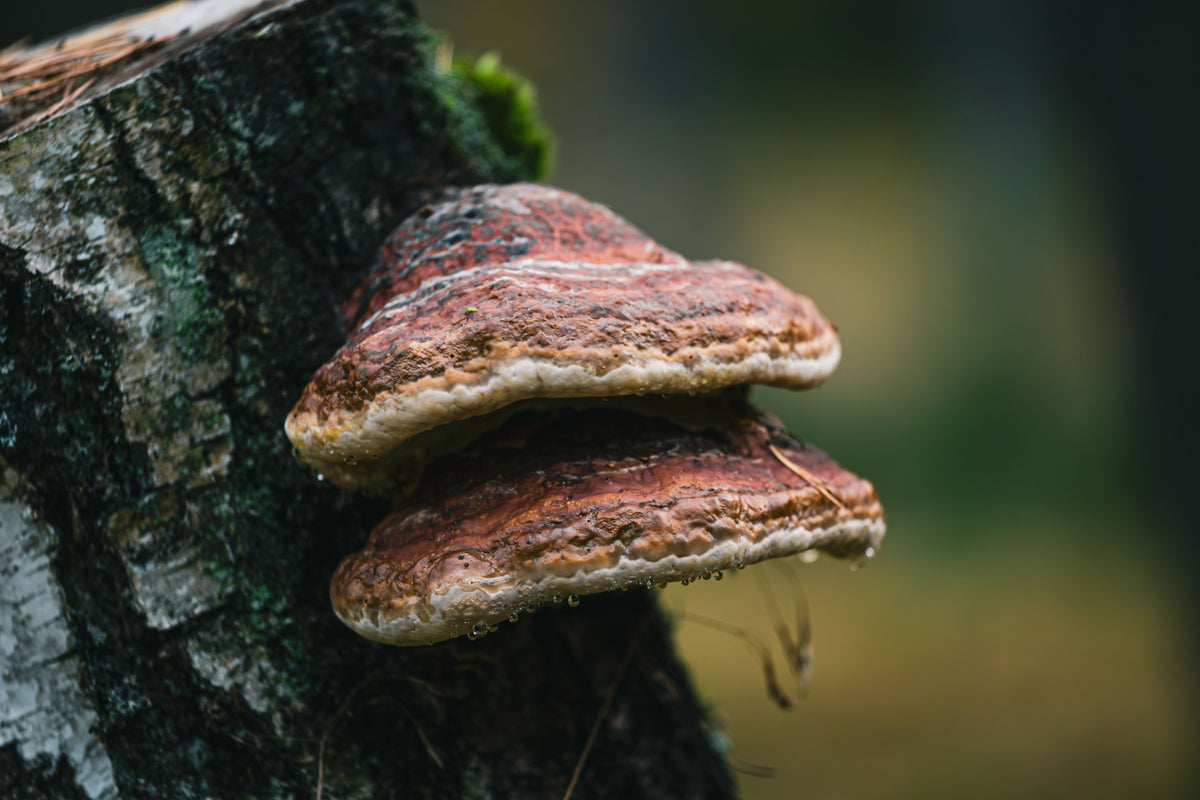
For centuries, Lion's Mane (Hericium erinaceus) has been eaten throughout Asia as both a food and a traditional medicinal mushroom. Naturally occurring compounds have been identified within Lion's Mane and researchers have investigated how these compounds interact with the nervous system, the digestive tract and other biological processes.
Can Lion's Mane Support Nervous System Health?
Our bodies are constantly replacing old cells with new ones. Skin cells, blood cells and the cells lining the digestive tract are regularly renewed throughout life. Nerve cells, however, are different.
Many neurons in the brain and spinal cord are designed to last for decades. Rather than being routinely replaced, they survive by maintaining an extraordinary network of connections with other nerve cells. Some neurons form thousands of these connections, known as synapses, allowing the nervous system to process information, store memories and coordinate movement.
Keeping these cells alive is no simple task. Neurons require a constant supply of nutrients and oxygen, but they also depend on specialised chemical signals that help them survive, grow and maintain their connections. Without these signals, nerve cells become more vulnerable to injury and degeneration.
Among the most important of these signalling molecules are a group of proteins known as neurotrophic factors. These proteins act as biological growth signals, helping neurons develop during early life while continuing to support their survival and function throughout adulthood.
One of the best-known neurotrophic factors is nerve growth factor (NGF). As researchers learned more about NGF, they began asking whether naturally occurring compounds could influence these signalling pathways.
And that’s where Lions Mane comes in.
The Discovery of Hericenones and Erinacines
Whilst investigating Lion's Mane, researchers isolated two families of compounds: hericenones and erinacines.
One important discovery was that these compounds are not distributed evenly throughout the mushroom. Hericenones are found primarily in the fruiting body, the familiar white cascading structure eaten as food, whereas erinacines are produced mainly by the mushroom's mycelium, the network of thread-like filaments that grows beneath the surface.
In laboratory studies using cultured cells, several hericenones and erinacines were shown to stimulate NGF synthesis or promote neurite outgrowth, an early stage of nerve cell development in which neurons extend new projections to form connections with other cells. These findings suggested that compounds from Lion's Mane could influence neuronal growth and repair under experimental conditions.
One study carried out by Wong and colleagues used rats with a crushed peripheral nerve.
After the injury, the rats were given either a daily Lion's Mane extract, vitamin B12 or plain water. The researchers then monitored how well the animals recovered by assessing their walking ability and examining the injured nerves under a microscope.
Rats receiving the Lion's Mane extract regained movement sooner and showed more evidence of early nerve repair than the comparison groups. These findings suggested that Lion's Mane may help support the early stages of peripheral nerve regeneration following injury.
Lee and colleagues also investigated Lion's Mane in rats, this time using a model of stroke. Rather than giving the mushroom after the stroke had occurred, the rats were fed a preparation rich in erinacine A for five days before the researchers temporarily reduced blood flow to part of the brain.
Compared with untreated rats, those given Lion's Mane developed smaller areas of brain damage, performed better on neurological tests and showed lower levels of inflammation and oxidative stress. This suggested that erinacine A may influence some of the biological processes involved in the brain's response to stroke.
However, it's important to note that the rats received Lion's Mane before the stroke occurred. The study therefore looked at whether it could help protect the brain from injury, not whether it could aid recovery after a stroke. Further research is needed to determine whether Lion's Mane has therapeutic value following neurological injury.
Researchers have also explored whether Lions Mane may influence cognitive function.
One of the first human studies was carried out in Japan and included 30 older adults with mild cognitive impairment, a condition in which memory and thinking begin to decline but dementia has not developed. Participants received either Lion's Mane or a placebo every day for 16 weeks.
Compared with those receiving the placebo, people taking Lion's Mane performed better on memory and thinking tests during the study. However, these improvements gradually disappeared once they stopped taking the supplement.
Additional investigations have explored whether Lion's Mane could play a role in Alzheimer's disease, a condition that causes progressive loss of memory and other cognitive abilities.
In one small pilot study, people with mild Alzheimer's disease received an erinacine A-rich Lion's Mane preparation for 49 weeks. During this time, researchers monitored memory, daily functioning and several blood markers linked to oxidative stress.
By the end of the study, participants showed improvements in several measures of memory and daily living compared with the start of the trial.
Gut Health
Whilst much of the research has focused on the nervous system, researchers have also investigated whether Lion's Mane may support digestive health.
The stomach is an incredibly harsh environment. It produces strong acid to help break down food and kill harmful bacteria. However, that same acid could also damage the stomach itself if it wasn't carefully controlled.
To protect itself, the stomach is coated with a thick layer of mucus that acts as a barrier between the acid and the stomach lining. The cells lining the stomach are also constantly repaired and replaced. Together, these protective mechanisms help keep the stomach healthy.
Problems can develop when these defences are weakened. Infection, chronic inflammation and some medications, particularly non-steroidal anti-inflammatory drugs (NSAIDs), can damage the stomach lining and increase the risk of gastritis and stomach ulcers.
Because Lion's Mane has been used traditionally to support digestive health for centuries, researchers have investigated whether it might help protect the stomach and support gut health.
Can Lion's Mane Affect H. pylori?
Helicobacter pylori (H. pylori) is a bacterium that can live in the stomach despite its highly acidic environment. Long-term infection can damage the stomach lining and increase the risk of ulcers.
In a laboratory study, researchers tested Lion's Mane extracts against H. pylori.
Some of the extracts slowed the growth of the bacteria, reduced the activity of an enzyme that helps it survive in stomach acid and showed antioxidant activity under laboratory conditions.
Can Lion's Mane Protect the Stomach Lining?
Researchers have also investigated whether Lion's Mane can help protect the stomach from injury.
In one study, rats were given a Lion's Mane extract before being exposed to alcohol, which was used to damage the stomach lining and create ulcers.
Compared with untreated rats, those receiving Lion's Mane developed smaller ulcers, had less damage to the stomach lining and produced more protective stomach mucus. They also showed lower levels of oxidative stress.
These findings suggested that Lion's Mane may help protect the stomach from injury. However, because the mushroom was given before the stomach damage occurred, the study investigated prevention rather than treatment of existing ulcers.
Can Lion's Mane Influence Inflammatory Bowel Disease?
In one study, rats with colitis were treated with different Lion's Mane extracts.
Compared with untreated animals, the treated rats developed less severe inflammation, experienced less damage to the lining of the colon and showed changes in the types of bacteria living in their gut.
These findings suggest that Lion's Mane may influence both the immune system and the gut microbiome.
Can Lion's Mane Influence the Gut Microbiome in Dogs?
In one study, aged dogs were fed diets containing Lion's Mane for 16 weeks before researchers analysed changes in their intestinal bacteria using metagenomic sequencing.
Dogs receiving the higher dose showed significant shifts in their gut microbiota, including an increase in Bacteroidetes and reductions in bacterial genera previously associated with inflammatory conditions, including Campylobacter, Streptococcus and Tyzzerella.
Although these findings suggest that Lion's Mane can alter the composition of the canine gut microbiome, further research is needed to determine whether these microbial changes translate into measurable improvements in health or digestive function.
Other Areas of Research
Although much of the research has focused on the nervous system and digestive tract, scientists have also investigated Lion's Mane in several other areas.
Laboratory and animal studies have explored its antioxidant, antimicrobial, immune-modulating and metabolic properties, with some studies suggesting effects on inflammatory signalling, blood glucose regulation and lipid metabolism.
Why Does the Type of Lion's Mane Matter?
One important point to remember is that not all Lion's Mane supplements are the same. Different studies have used different parts of the mushroom, different preparation methods and different amounts of its naturally occurring compounds. This makes it difficult to compare the results directly.
As discussed earlier, Lion's Mane contains two important groups of compounds: hericenones, which are found mainly in the fruiting body (the white mushroom you can see), and erinacines, which are found mainly in the mycelium (the thread-like network that grows beneath the surface).
Researchers have studied a wide range of products, including whole mushroom powders, hot water extracts, alcohol extracts and preparations enriched with specific compounds. Because these products contain different mixtures of active compounds, they may not all produce the same biological effects.
When reading research on Lion's Mane, it's important to consider which part of the mushroom was used and how it was prepared, as this may help explain why different studies sometimes report different results.
The Takeaway…
Lion's Mane didn't evolve to repair nerves, improve memory or protect the stomach. It evolved with compounds that gave the fungus an advantage in its own environment. Thousands of years later, we're only beginning to discover that some of those same molecules can interact with our own and our dog’s physiology.
Isn’t nature incredible?
Lisa Hannaby-Aird
A Registered Associate Nutritionist and author of Nutrition for Dogs, Lisa combines expertise in nutrition, psychology, biochemistry, and neuroscience to help dog owners understand the science behind canine health, behaviour, and nutrition.
References:
Cho HW, Choi S, Seo K, Kim KH, Jeon JH, Kim CH, Lim S, Jeong S, Chun JL. Gut microbiota profiling in aged dogs after feeding pet food contained Hericium erinaceus. J Anim Sci Technol. 2022 Sep;64(5):937-949. doi: 10.5187/jast.2022.e66. Epub 2022 Sep 30. PMID: 36287790; PMCID: PMC9574611.
Diling C, Xin Y, Chaoqun Z, Jian Y, Xiaocui T, Jun C, Ou S, Yizhen X. Extracts from Hericium erinaceus relieve inflammatory bowel disease by regulating immunity and gut microbiota. Oncotarget. 2017 Sep 6;8(49):85838-85857. doi: 10.18632/oncotarget.20689. PMID: 29156761; PMCID: PMC5689651.
Lee KF, Chen JH, Teng CC, Shen CH, Hsieh MC, Lu CC, Lee KC, Lee LY, Chen WP, Chen CC, Huang WS, Kuo HC. Protective effects of Hericium erinaceus mycelium and its isolated erinacine A against ischemia-injury-induced neuronal cell death via the inhibition of iNOS/p38 MAPK and nitrotyrosine. Int J Mol Sci. 2014 Aug 27;15(9):15073-89. doi: 10.3390/ijms150915073. PMID: 25167134; PMCID: PMC4200813.
Mori, K., Inatomi, S., Ouchi, K., Azumi, Y. and Tuchida, T. (2009), Improving effects of the mushroom Yamabushitake (Hericium erinaceus) on mild cognitive impairment: a double-blind placebo-controlled clinical trial. Phytother. Res., 23: 367-372. https://doi.org/10.1002/ptr.2634
Wang, G., Zhang, X., Maier, S. E., Zhang, L., & Maier, R. J. (2019). In Vitro and In Vivo Inhibition of Helicobacter pylori by Ethanolic Extracts of Lion's Mane Medicinal Mushroom, Hericium erinaceus (Agaricomycetes). International journal of medicinal mushrooms, 21(1), 1–11. https://doi.org/10.1615/IntJMedMushrooms.2018029487
Wong KH, Naidu M, David P, Abdulla MA, Abdullah N, Kuppusamy UR, Sabaratnam V. Peripheral Nerve Regeneration Following Crush Injury to Rat Peroneal Nerve by Aqueous Extract of Medicinal Mushroom Hericium erinaceus (Bull.: Fr) Pers. (Aphyllophoromycetideae). Evid Based Complement Alternat Med. 2011;2011:580752. doi: 10.1093/ecam/neq062. Epub 2011 Aug 11. Erratum in: Evid Based Complement Alternat Med. 2018 Dec 16;2018:9820769. doi: 10.1155/2018/9820769. PMID: 21941586; PMCID: PMC3176599.
Wong JY, Abdulla MA, Raman J, Phan CW, Kuppusamy UR, Golbabapour S, Sabaratnam V. Gastroprotective Effects of Lion's Mane Mushroom Hericium erinaceus (Bull.:Fr.) Pers. (Aphyllophoromycetideae) Extract against Ethanol-Induced Ulcer in Rats. Evid Based Complement Alternat Med. 2013;2013:492976. doi: 10.1155/2013/492976. Epub 2013 Nov 5. PMID: 24302966; PMCID: PMC3835629.