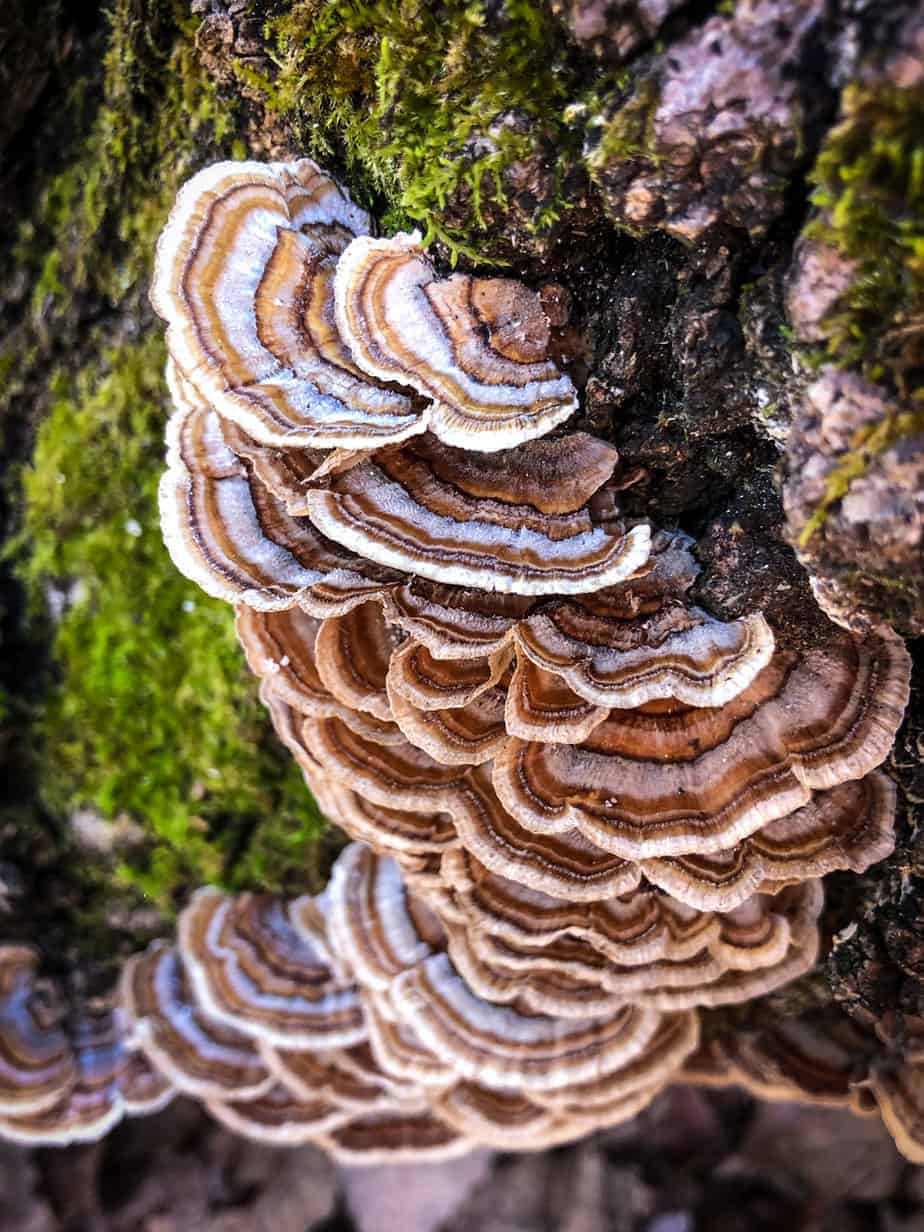
For more than 2,000 years, Reishi (Ganoderma lucidum) has been used in traditional medicine throughout Asia. Today, it is another of the most extensively researched medicinal mushrooms.
But why?
Scientists have identified a range of naturally occurring compounds within Reishi and are investigating how they interact with the body's cells. Much of the research has focused on two groups of compounds: beta-glucans, which are complex carbohydrates found in the mushroom's cell wall, and triterpenoids, particularly compounds known as ganoderic acids.
Over the past few decades, these compounds have been studied in relation to immune communication, inflammation, oxidative stress, cancer biology and the gut microbiome.
Some studies have taken place in isolated cells, others in laboratory animals, while a smaller number have involved people and dogs.
So, what have they found?
Reishi may interact with the immune system
Our immune system is made up of lots of different cells, each with its own job. Some recognise invading bacteria and viruses, others destroy damaged cells, while others coordinate the wider immune response by sending chemical messages to neighbouring cells.
Researchers have wondered whether compounds found in Reishi communicate with some of these immune cells.
One of the earliest studies investigated purified Reishi polysaccharides using human immune cells grown in the laboratory. The researchers found that dendritic cells, often described as the immune system's "messengers", became more active after exposure to the Reishi compounds. They also produced different signalling molecules that help coordinate immune responses. The researchers concluded that Reishi polysaccharides were capable of interacting directly with immune cells under laboratory conditions.
Research has also started to move into dogs.
In 2024, researchers fed healthy beagles different amounts of Ganoderma lucidum for four weeks before giving them their routine rabies vaccination. They then measured how the dogs' immune systems responded. Dogs receiving the highest dose produced more rabies antibodies than the control group. Most of the other immune measurements remained unchanged.
Reishi may interact with inflammatory processes
Inflammation is one of the body's normal responses to injury or infection. Immune cells release chemical signals that help remove damaged tissue and begin the repair process before the response settles back down again.
Researchers have investigated whether compounds from Reishi interact with some of these signalling pathways.
One study isolated a compound from Reishi and added it directly to immune cells growing in the laboratory. The researchers found that the cells produced lower amounts of TNF-α, one of the signalling molecules involved in inflammation. They also reported changes in a communication pathway known as NF-κB, which helps regulate how inflammatory signals are switched on inside cells.
Reishi may interact with levels of oxidative damage
Every cell in the body naturally produces molecules called reactive oxygen species, often shortened to ROS. Although they are often associated with cell damage, they also play important roles in normal cell signalling. Problems arise when too many are produced, creating oxidative stress.
In one study, scientists grew human skin cells in the laboratory before exposing them to hydrogen peroxide, a chemical commonly used to create oxidative stress in experiments. Some of the cells were then treated with Reishi polysaccharides.
Compared with untreated cells, the researchers found lower markers of oxidative damage and greater activity of several antioxidant enzymes. They also identified changes in a signalling pathway called Nrf2, which helps control many of the body's own antioxidant defences.
Reishi may interact with cancer cells
Our bodies constantly produce damaged or abnormal cells. Most are recognised and removed before they become a problem through a process known as immune surveillance, where immune cells identify and destroy cells that no longer belong.
Researchers became interested in Reishi because laboratory studies suggested some of its compounds interact with the cells involved in this process.
Laboratory studies found that purified Reishi beta-glucans could interact with immune cells including macrophages, dendritic cells and natural killer cells. Scientists have also studied ganoderic acids, another group of compounds found in Reishi. Researchers exposed cancer cells growing in the laboratory directly to these compounds and they found changes in cancer cell growth, programmed cell death and other biological processes involved in tumour development.
A Cochrane review brought together the available human clinical trials involving Reishi alongside conventional cancer treatment. The reviewers concluded there was not enough evidence to recommend Reishi as a treatment for cancer on its own. However, some of the studies reported improved tumour responses and changes in immune measurements when Reishi was used alongside conventional treatment. Because the studies were generally small and varied in quality, the reviewers concluded that larger, well-designed clinical trials are needed before firm conclusions can be drawn.
Reishi and the Gut
Many of the complex carbohydrates found in mushrooms are not broken down by digestive enzymes. Instead, they pass into the large intestine where they become available to the trillions of bacteria that make up the gut microbiome.
Researchers have started asking whether this also happens with Reishi.
In one study, scientists mixed Reishi extracts with gut bacteria collected from dogs, rats and people. The bacteria from all three species were able to break down components of the mushroom, showing that Reishi can be metabolised by the gut microbiome. This raises a question on whether the role of Reishi may be partly influenced by its metabolism in the gut.
Is the type of Reishi important?
One thing that quickly becomes clear when reading the research is that not all Reishi preparations are the same.
Some studies use the fruiting body, while others investigate the mycelium. Some isolate purified beta-glucans, whilst others study triterpenoids such as ganoderic acids. Researchers also use different extraction methods, including water and alcohol, which produce extracts with different chemical profiles.
This means that results from one study cannot automatically be applied to every Reishi product. When reading research, it's always worth looking at exactly what preparation was used.
The takeaway
For something that's been used for thousands of years, we're only just beginning to understand it.
What started as traditional knowledge has become an active area of scientific research. Over the past few decades, researchers have investigated how compounds found in Reishi interact with immune cells, inflammatory signalling pathways, oxidative stress, cancer biology and the gut microbiome.
Each study has added another piece to the puzzle.
Quite a mushroom, don't you think?
Lisa Hannaby-Aird
A Registered Associate Nutritionist and author of Nutrition for Dogs, Lisa combines expertise in nutrition, psychology, biochemistry, and neuroscience to help dog owners understand the science behind canine health, behaviour, and nutrition.
Reference List
Chen, S.-N., Nan, F.-H., Liu, M.-W., Yang, M.-F., Chang, Y.-C., & Chen, S. (2023). Evaluation of immune modulation by β-1,3/1,6-D-glucan derived from Ganoderma lucidum in healthy adults: A randomized controlled trial. Foods, 12(3), 659. https://pubmed.ncbi.nlm.nih.gov/36766186/
Jin, X., Ruiz Beguerie, J., Sze, D. M. Y., & Chan, G. C. F. (2016). Ganoderma lucidum (Reishi mushroom) for cancer treatment. Cochrane Database of Systematic Reviews, 4, CD007731. https://pubmed.ncbi.nlm.nih.gov/22696372/
Kayser, E., Castaneda, P. L., Soto-Diaz, K., Steelman, A. J., Murphy, A., Spindola, M., He, F., & de Godoy, M. R. C. (2024). Functional properties of Ganoderma lucidum supplementation in canine nutrition. Journal of Animal Science, 102. https://pubmed.ncbi.nlm.nih.gov/38417056/
Lin, Y.-L., Liang, Y.-C., Lee, S.-S., Chiang, B.-L. (2005). Polysaccharide purified from Ganoderma lucidum induced activation and maturation of human monocyte-derived dendritic cells by the NF-κB and p38 MAPK pathways. Journal of Leukocyte Biology, 78(2), 533-543. https://pubmed.ncbi.nlm.nih.gov/15894585/
Liu, C., Yang, N., Song, Y., Wang, L., Zi, J., Zhang, S., Dunkin, D., Busse, P., Weir, D., Tversky, J., Miller, R. L., Goldfarb, J., Ghosh, B., & Li, X.-M. (2015). Ganoderic acid C1 isolated from the anti-asthma herbal formula ASHMI suppresses TNF-α production by mouse macrophages and peripheral blood mononuclear cells from asthma patients. International Immunopharmacology, 27(2), 224-231. https://pubmed.ncbi.nlm.nih.gov/35543349/
Shi, X., Cheng, W., Wang, Q., Zhang, J., Wang, C., & Li, M. (2021). Exploring the protective and reparative mechanisms of Ganoderma lucidum polysaccharides against H₂O₂-induced oxidative stress in human skin fibroblasts. Clinical, Cosmetic and Investigational Dermatology, 14, 1481-1496. https://pmc.ncbi.nlm.nih.gov/articles/PMC8525518/
Wachtel-Galor, S., Yuen, J., Buswell, J. A., & Benzie, I. F. F. (2011). Ganoderma lucidum (Lingzhi or Reishi): A medicinal mushroom. In Herbal Medicine: Biomolecular and Clinical Aspects (2nd ed.). CRC Press.