We've explored how dogs stay cool and why hydration supports everything from circulation to temperature regulation. However, understanding hydration is only part of the story. If water is so important, surely dogs would simply just drink enough? Wouldn’t they?
The answer lies in a fascinating interaction between physiology and behaviour. While the body has sophisticated systems for detecting when it needs water, those signals don't always translate into drinking behaviour, particularly in active and highly motivated dogs.
The Science of Thirst
Thirst isn't simply something we feel when we're hot. It’s a carefully regulated physiological response designed to maintain the body's fluid balance.
As dogs lose water through panting, breathing, urination and other normal bodily functions, the concentration of dissolved substances in the blood begins to increase. Specialised osmoreceptors within the hypothalamus detect this rise in blood osmolality and trigger two important responses. They stimulate the release of antidiuretic hormone (ADH), also known as vasopressin, which signals the kidneys to conserve water by producing more concentrated urine. At the same time, they activate the sensation of thirst, encouraging the dog to seek out and drink water before fluid balance is disrupted further.
If fluid losses continue and blood volume begins to fall, additional hormonal systems come into play. Reduced blood volume and blood pressure activate the renin-angiotensin-aldosterone system (RAAS), which helps conserve both sodium and water while also further stimulating thirst.
Together, these systems work continuously to maintain hydration under normal conditions.
For many dogs, these physiological systems work remarkably well.
However, behaviour doesn't always follow physiology.
Working and sporting dogs are often highly motivated by the task in front of them. Whether they're running a canicross course, searching for a missing person, working livestock or competing in agility, their focus on the task can override behaviours that would normally occur naturally, including drinking.
Travel, competition, excitement, anticipation and unfamiliar environments can also influence how much a dog chooses to drink.
In other words, a dog may have a physiological need for water but still fail to consume enough fluid to fully replace what has been lost.
This is one reason experienced handlers often take a proactive approach to hydration rather than relying on thirst alone. Rather than asking whether water is available, we need to ask whether the dog will choose to drink it. Simply placing a bowl of water in front of a dog doesn't guarantee that they will consume enough fluid, particularly before or during exercise.
What Makes Dogs Want To Drink?
Like food, drinking behaviour is influenced by more than biological need.
Taste, smell, familiarity, temperature and previous experiences all affect whether a dog finds a fluid appealing. This characteristic is known as palatability. Highly palatable fluids encourage greater voluntary intake because dogs simply choose to drink more of them.
From a hydration perspective, this can be extremely valuable. Increasing the amount of fluid a dog willingly drinks may do more to support hydration than simply providing unlimited access to plain water.
What Does The Research Show?
Research by Otto and colleagues investigating hydration strategies in detection dogs found that dogs offered flavoured hydration solutions voluntarily consumed larger volumes of fluid than dogs offered plain water alone. Importantly, the greatest benefit appeared to come from increased fluid intake itself rather than from any single ingredient within the drink.
This highlights an important principle. The best hydration strategy is often the one that encourages a dog to drink enough in the first place.
Where Goat's Milk Fits In
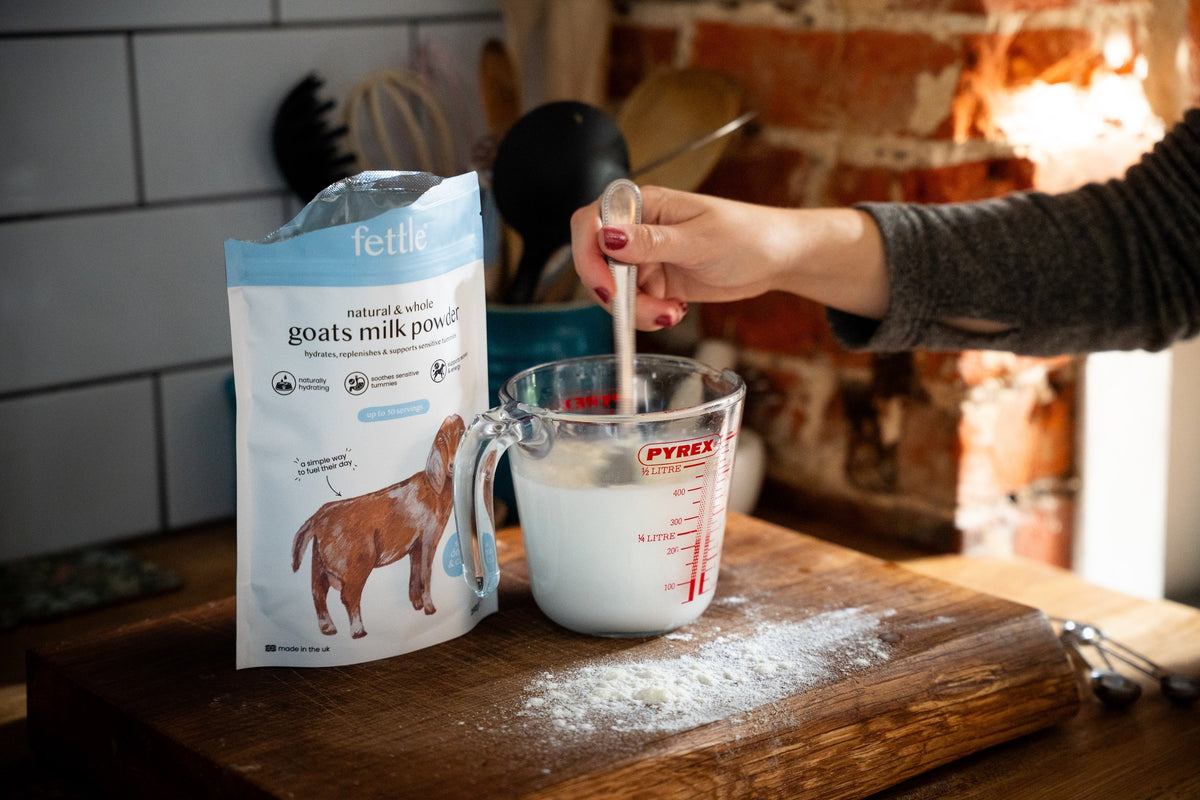
Many dogs naturally find goat's milk highly appealing. When mixed with water, it can encourage dogs to consume a larger volume of fluid than they might otherwise drink.
From a hydration perspective, this increase in voluntary fluid intake may be its greatest benefit.
Goat's milk also contributes naturally occurring nutrients. These nutrients can complement hydration, particularly during periods of increased activity or warm weather.
However, the primary goal remains simple: encouraging dogs to drink enough to support normal physiological function.
Practical Ways To Encourage Hydration
Every dog is different, but several practical strategies may help encourage fluid intake:
Offer fluids before activity rather than waiting until afterwards.
Encourage dogs to drink during breaks on longer walks or training sessions.
Take familiar hydration options to competitions, training days and travel.
Offer highly palatable fluids for dogs that are reluctant to drink plain water.
Monitor your own dog's drinking habits rather than assuming thirst alone will regulate hydration.
Hydration should be viewed as part of an overall performance and wellbeing strategy rather than simply a response to hot weather.
Looking Ahead
We've explored how dogs stay cool, why hydration supports thermoregulation, and how encouraging dogs to drink can help maintain fluid balance.
However, there's one environmental factor that can make all of these systems work much harder: humidity.
In the final article of this series, we'll explore why humid conditions make it more difficult for dogs to lose heat through panting, how this can increase the importance of hydration, and what it means for exercising dogs safely during the warmer months.
Lisa Hannaby-Aird
A Registered Associate Nutritionist and author of Nutrition for Dogs, Lisa combines expertise in nutrition, psychology, biochemistry, and neuroscience to help dog owners understand the science behind canine health, behaviour, and nutrition.
Reference of Interest:
Otto, C. M., Hare, E., Nord, J. L., Palermo, S. M., Kelsey, K. M., Darling, T. A., Schmidt, K., & Coleman, D. (2017). Evaluation of Three Hydration Strategies in Detection Dogs Working in a Hot Environment. Frontiers in veterinary science, 4, 174. https://doi.org/10.3389/fvets.2017.00174