Unlike humans, dogs can't rely on sweating to cool down. Instead, they use a combination of physiological and behavioural mechanisms to maintain a safe body temperature, even during exercise and warm weather.
Understanding how these systems work can help us support our dogs on even the warmest days. So let's take a look at how dogs stay cool, or more technically, how they thermoregulate.
Dogs Are Constantly Producing Heat
Every cell in your dog's body produces heat. Even at rest, normal metabolism generates heat as nutrients are converted into energy. During exercise, heat production rises dramatically as working muscles convert chemical energy into movement. Much of that energy is released as heat. If heat is generated faster than it can be dissipated, body temperature begins to rise. If this rise becomes excessive, performance, wellbeing, and ultimately health can be compromised.
So how do we get rid of this heat?
Well, like other mammals, dogs lose heat through four main mechanisms.
Radiation
If your dog's body is warmer than the surrounding environment, heat naturally moves away from the body. This process is known as radiation and helps dogs lose heat even when they are resting.
Convection
Moving air carries heat away from the body. A breeze, fan, or air-conditioned room increases heat loss by replacing warm air around the dog with cooler air.
Conduction
Heat moves from a warmer object to a cooler one through direct contact. This is why dogs often seek out cool tiles, shaded ground, damp grass, or even a paddling pool during warm weather.
Evaporation
Evaporation is the most important cooling mechanism during exercise and hot conditions.
As water evaporates, it absorbs heat. This allows the body to transfer heat into the environment while helping maintain a stable internal temperature.
This is why dogs pant.
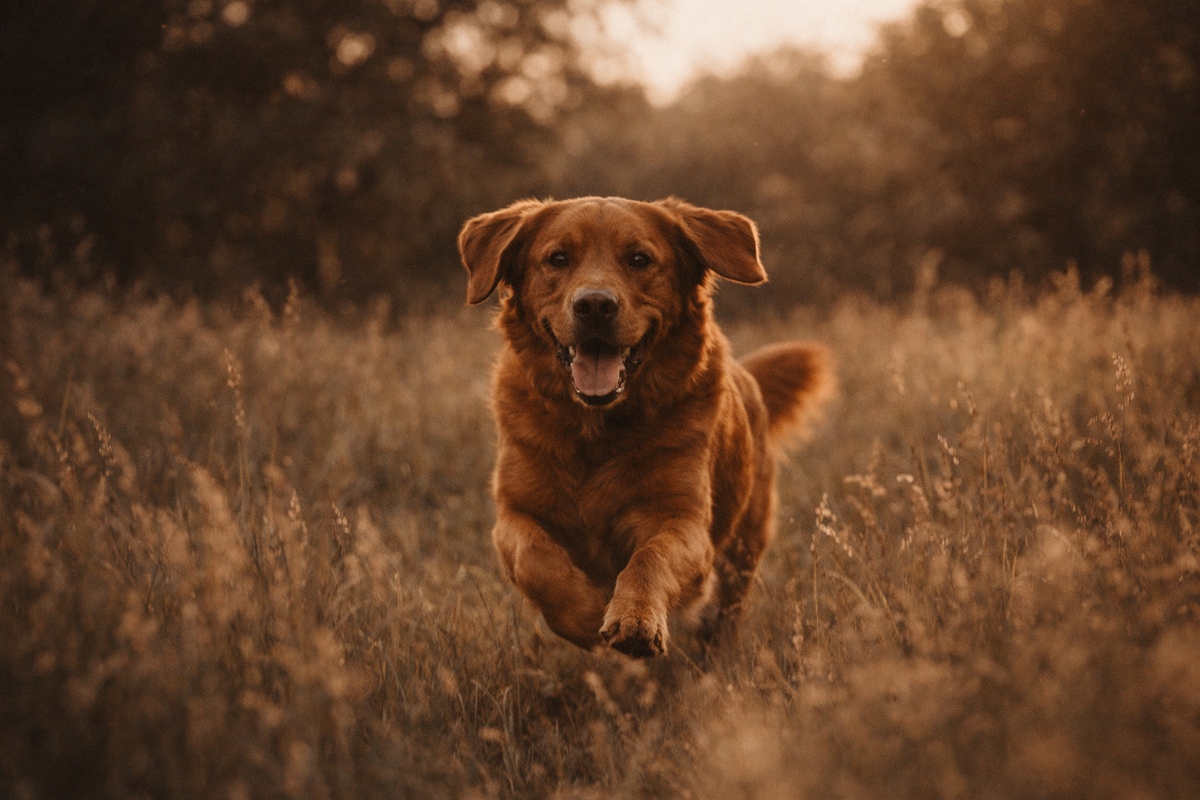
When a dog pants, air moves rapidly across the moist surfaces of the tongue, mouth, nasal passages, and respiratory tract. As moisture evaporates, heat is removed from these tissues. Blood flowing through these areas is cooled before returning to circulation, helping transport heat away from the body.
As exercise intensity or environmental temperature increases, panting becomes faster and deeper, allowing more heat to be dissipated.
Every breath also carries a small amount of water out of the body, a point we'll return to later.
Do Dogs Sweat?
Yes, but not very much.
Dogs possess sweat glands in their paw pads, which is why you may occasionally notice damp paw prints (usually when they are stressed at the vets for example).
However, sweating contributes relatively little to overall temperature regulation compared with panting. The small surface area involved means that paw sweating alone cannot dissipate the amount of heat generated during exercise or hot weather.
Can Dogs Cool Themselves Through Their Paws?
Many owners have heard that cooling a dog's paws can help lower body temperature. There is some truth to this. Walking through cool water or lying on a cool surface allows heat to move from the body into a cooler environment through that process known as conduction.
However, the paws are not the body's primary cooling system. One reason is that the blood vessels within the paws are arranged in a way that helps conserve heat when needed. Arteries carrying warm blood from the body run alongside veins carrying cooler blood returning from the paws. This arrangement, known as a countercurrent heat exchange system, allows heat to be transferred between blood vessels before it reaches the paw surface. In cold conditions, this helps prevent excessive heat loss through the feet.
While cooling the paws may provide some local relief, most heat dissipation during exercise and hot weather still depends on the body's larger cooling mechanisms, particularly the heat lost through panting.
Why Some Dogs Struggle More Than Others
Not all dogs regulate heat equally well.
- Several factors influence heat tolerance, including:
- Breed and skull shape
- Body condition
- Fitness level
- Coat type
- Age
- Acclimatisation to environmental conditions
Brachycephalic breeds often face greater challenges because their shortened airways can reduce the efficiency of respiratory cooling.
Similarly, overweight dogs carry additional insulation and often generate more heat during activity.
Working and sporting dogs face a different challenge. Their motivation to continue exercising can sometimes exceed their ability to dissipate heat, increasing the importance of careful management during warm conditions.
Thermoregulation Is A Whole-body Process
When people think about cooling a dog, they often focus on individual body parts such as the tongue or paws, but thermoregulation involves the entire body working together.
You can think of blood as the body's coolant. Like the coolant in a car engine, blood helps transport heat away from where it is produced so it can be released elsewhere. Heat generated by working muscles is transported around the body by the circulation before being lost through evaporation, radiation, conduction, and convection.
In dogs, evaporation occurs primarily through panting. As blood flows through the moist tissues of the mouth, tongue, and respiratory tract, heat can be transferred to these surfaces and lost as water evaporates.
The respiratory and cardiovascular systems work together continuously to move heat from where it is produced to where it can be lost. When these systems are functioning efficiently, dogs can cope remarkably well with exercise and environmental challenges.
Looking Ahead
Dogs have evolved highly effective cooling mechanisms, but these systems depend on one critical resource: water.
Every breath lost through panting removes heat from the body, but it also removes moisture.
In the next article, we'll explore why hydration is such an important part of your dog's cooling system, and why encouraging dogs to drink can sometimes be just as important as keeping them cool.
Lisa Hannaby-Aird
A Registered Associate Nutritionist and author of Nutrition for Dogs, Lisa combines expertise in nutrition, psychology, biochemistry, and neuroscience to help dog owners understand the science behind canine health, behaviour, and nutrition.
Papers of Interest:
Otto CM, Cobb ML, Wilsson E, Burghardt WF, Fox MJ.
Evaluation of Three Hydration Strategies in Detection Dogs Working in a Hot Environment.
Frontiers in Veterinary Science. 2017;4:174.
Robbins PJ, Ramos MT, Zanghi BM, Otto CM.
Environmental and Physiological Factors Associated with Stamina in Dogs Exercising in High Ambient Temperatures.
Frontiers in Veterinary Science. 2017;4:144.
Templeman JR, McCarthy N, Lindinger MI, Shoveller AK.
Changes in Salivary Electrolyte Concentrations in Mid-Distance Trained Sled Dogs During 12 Weeks of Incremental Conditioning.
Physiological Reports. 2020;8(11):e14493.
Baker MA, Doris PA, Hawkins MJ.
Effect of Dehydration and Hyperosmolality on Thermoregulation in Exercising Dogs.
Journal of Applied Physiology: Respiratory, Environmental and Exercise Physiology.
1983;55(2):312-319.